Site 14 – Telephone Exchange
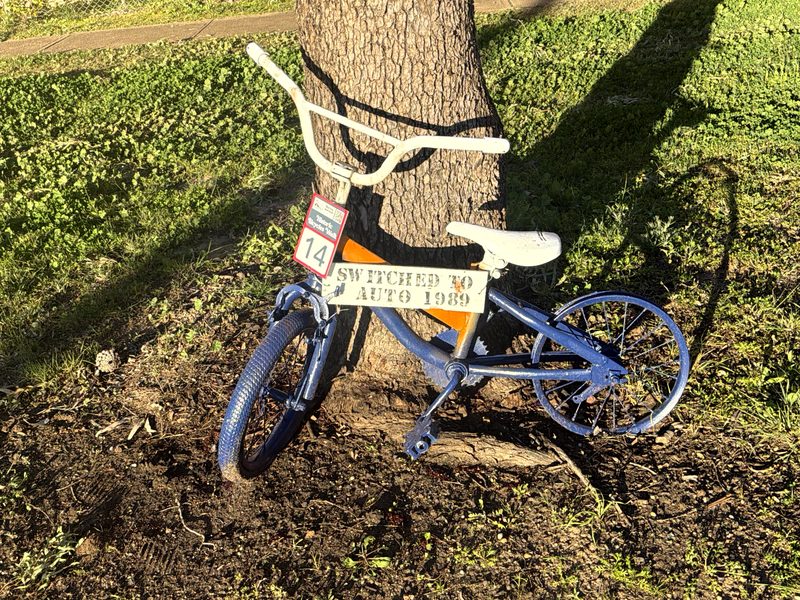 For much of the twentieth century, the Burren Junction Telephone Exchange was the communications lifeline of the district. Long before mobile phones, computers and the internet, every local, interstate and emergency telephone call passed through the hands of a telephone operator.
Telephone services first arrived in Burren Junction during the early 1900s as the growing township expanded alongside the railway. In 1910, land was acquired for an official Post Office, and by 1916 the Postmaster-General’s Annual Report listed Burren Junction among the new telephone exchange buildings completed throughout Australia.
The first telephone subscribers reflected the small but growing community. Local businesses, graziers and residents were connected by hand-operated lines, with early subscribers including Cadden and Seccombe, Harry Jones, Fred Long, Oliver Hardy, George Mulckey and several surrounding properties. Every telephone call required the operator to manually connect the caller by inserting cords into the switchboard before speaking directly to the people involved.
For many years, the Telephone Exchange was much more than a communications centre. Operators knew every family in the district and were often the first to learn of emergencies, accidents, births and important news. They connected doctors, police, hospitals, businesses and neighbouring towns, providing an essential service to an isolated rural community.
Among the early operators remembered by local residents were Dolly Duncan (née Murphy) and Hilda Willard (née Holcombe), who worked at the exchange during the 1930s. Their friendly voices became familiar to many throughout the district, reflecting a time when every telephone call had a personal touch.
As technology advanced, manual exchanges gradually disappeared across Australia. In 1989, Burren Junction’s hand-operated telephone exchange closed with the introduction of automatic dialling, bringing to an end more than seventy years of personal telephone service. Although the new system offered greater convenience, many residents remembered the change as “The Day Burren Lost Its Personal Touch.”
Some of the last operators working on the exchange were Sharon Shearer, Cherie Pilditch (St John), Geraldine Hardy, Tracey Carroll, Yvette Cocharan and Bev Chapman (Dec)
Today, the former Telephone Exchange building continues to serve the community in a different way, while the original Burren Junction switchboard has been preserved for future generations.
The switchboard is now proudly displayed in the Burren Junction Museum on loan from the Gunnedah Museum, allowing visitors to experience an important part of the town’s communications history. It stands as a reminder of a time when every call depended on the skill, patience and dedication of the local telephone operators.
Preserving Our History
Pictured beside the original switchboard is Sharon Shearer, whose dedication to preserving Burren Junction’s history has played an important role in bringing the Historic Bicycles Walk to life. As well as helping research and develop the walk, Sharon has hand-painted many of the colourful bicycles that visitors will discover throughout the town, each marking a site along the trail.
The preserved switchboard and the Historic Bicycles Walk remind us that history is not only about buildings and photographs—it is also about the people who care enough to preserve those stories for future generations.
Through the generosity of the Gunnedah Museum, the efforts of local volunteers and the support of the Burren Junction community, this important piece of our communications history can now be enjoyed by visitors and locals alike.
Historical information sourced primarily from Visions of the Plains – A History of Burren Junction and District (2nd Edition) by Judy Field, together with local community recollections, historical newspaper articles and the preserved Burren Junction Telephone Exchange.
Photos
Photo Telephone Exchange Today
The former Burren Junction Telephone Exchange building. For many decades this was the communications hub of the district, where every telephone call was manually connected by local operators.
Photo Early Telephone Operator
One of Burren Junction’s early telephone operators working at the manual switchboard during the 1930s. Every telephone call was connected by hand before the introduction of automatic dialling.
Photo Preserving Our History
Sharon Shearer beside the original Burren Junction Telephone Exchange switchboard, now proudly displayed in the Burren Junction Museum on loan from the Gunnedah Museum. Sharon has played an important role in researching the Historic Bicycles Walk and hand-painting many of the bicycles that mark the heritage trail.
Photo Newspaper Article
Newspaper coverage marking the closure of the Burren Junction manual telephone exchange in 1989. The article, “The Day Burren Lost Its Personal Touch,” captured the community’s feelings as automatic dialling replaced the local operators.
Early Telephone Subscribers
- Mrs W. Boake
- Cadden and Seccombe
- O. J. Hardy – “Glenrowen”
- H. W. Jones
- F. A. Long – “Cahnaroo”
- J. A. Mould – Storekeeper
- Colin Mackenzie – “Glenburnie”
- M. Mulckey
- Rowell Bros – “Drildool”
- J. W. Ryan
- A. E. Smith – “Lochmohir”
- L. F. Thompson – “Towri”