Site 22 – Burren Junction School
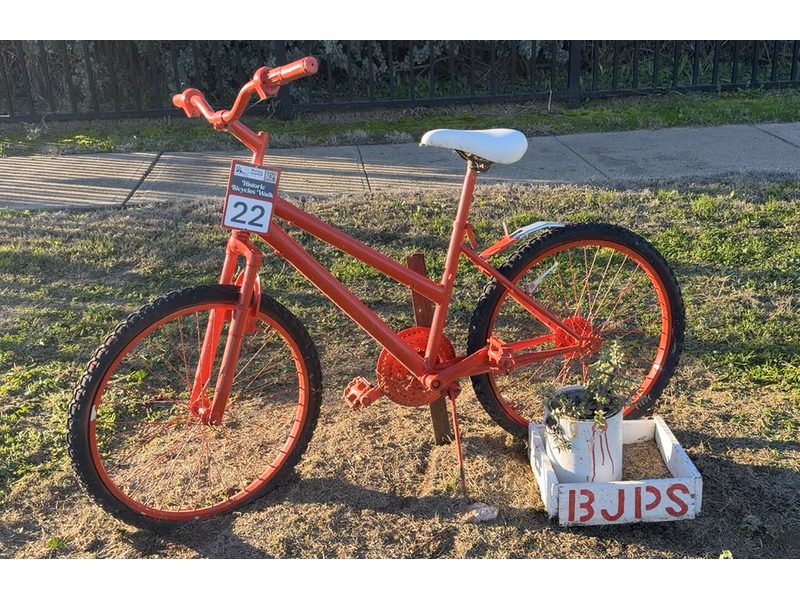 Education has been part of Burren Junction since the township was first established. Before a public school existed, local children attended a small private school believed to have been located near “Maxwellton”, about five kilometres from the present site. The teacher travelled between Burren Junction, Rowena and the Pilliga, providing lessons wherever they were needed.
With the arrival of the railway in 1903, Burren Junction’s population grew rapidly and families soon called for a permanent school. A memorandum submitted in August 1903 recorded that between 20 and 30 children already lived in the district, many from railway construction families, and requested that a public school be established.
Government officials initially questioned whether the population would remain once the railway construction ended. Local inspectors, however, believed Burren Junction would continue to grow and successfully argued for a permanent school.
Plans were approved and, in January 1904, a tender of £95 15s 10d was accepted to build the first school. The Burren Junction Public School officially opened in July 1904, with Walter McNiven appointed as the first teacher.
The original school building measured just 22 feet by 16 feet (approximately 6.7 × 4.9 metres). Although modest, it provided the district’s children with their first permanent place of learning.
The early years were not without challenges. Enrolments rose and fell as railway workers came and went, classrooms quickly became overcrowded, and teachers often worked under difficult conditions. Despite these obstacles, the school remained an important part of the growing township.
By late 1904, Burren Junction was recognised as an established Public School, and over the following years additional teachers were appointed, including James Dickson, Edward Bolus and Herbert Miller.
As Burren Junction continued to develop, the original school became too small. In 1911, a larger school building was completed, providing improved facilities for the increasing number of students. Floods, droughts and the extreme heat of the north-west tested both teachers and pupils, but the school continued to serve generations of local children.
By the 1920s, Burren Junction Public School had become one of the district’s most important community institutions. Children from farming families, railway workers and surrounding properties all attended the school, and many lifelong friendships were formed within its classrooms.
Today, the original school building survives as the School House, standing as a reminder of the determination of the early families who recognised that education was essential to the future of their community.
Burren Junction Public School Principals
- W. S. McNiven (1904)
- J. Dickson (1904)
- E. Bolus (1909)
- H. Miller (1911)
- D. Johnston (1913)
- A. H. Cooper (1916)
- J. A. Brodie (1918)
- G. Marks (1921)
- A. Dunbar (1922)
- G. W. Heuston (1925)
- W. McPherson (1927)
- A. Williams (1931)
- G. Williams (1940)
- W. Clifton (1944)
- A. W. Wilson (1950)
- C. Badham (1954)
- J. Jeffrey (1957)
- W. Knight (1960)
- B. Lewin (1963)
- R. B. Ewert (1966)
- B. Reading (1969)
- I. R. Rouchley (1972)
- T. P. Long (1975)
- J. W. Parmenter (1977)
- D. A. Martin (1979)
- C. A. Dewson (1983)
- J. A. Field (1987)
- E. Auld (1997)
- S. Smith (1998)
- S. Parson (2000)
- P. Howard (2002)
- I. McLaughlin (2004)
- V. Fouracre (2006)
- P. Carrett (2009)
- L. Starkey (2014)
- S. P. Galvin (2017)
- S. Malla (2024)
Historical information sourced primarily from Visions of the Plains – A History of Burren Junction and District (2nd Edition) by Judy Field.
Photos
Photo Burren Junction School House Today
The original Burren Junction School House still stands today, preserving an important part of the town’s educational history.
Photo Burren Junction School, 1916
The Burren Junction Public School in 1916. Built to replace the original school, it served generations of children from Burren Junction and the surrounding district.
Photo Burren Junction School Students, circa 1924
Students and teachers at Burren Junction Public School around 1924. By this time the school had become firmly established as the educational centre of the district.