Site 23 – School Residence
 “Please Respect Private Property”
Please remember this is a private residence. We ask visitors to respect the occupants’ privacy and enjoy the site from the street without approaching or looking into windows.
As Burren Junction became a permanent township, providing suitable accommodation for the school teacher became a priority. In the early years, teachers were expected to find their own lodging, often renting rooms under difficult conditions.
Recognising the importance of attracting and retaining teachers, Inspector Riley recommended in 1911 that a residence be built for the head teacher. Approval was granted, and in 1912 tenders were accepted for the construction of a residence at a cost of £561 19s.
The residence was completed and ready for occupation on 30 April 1913, providing the first purpose-built home for Burren Junction’s teaching staff.
Life in the new residence was not always easy. Before the house was even occupied, concerns were raised about the lack of a reliable water supply, with only limited rainwater storage available to serve the home. During the hot summers, flies were a constant problem, and inspectors reported that screened doors and windows were urgently needed. The property was also unfenced, allowing goats and cattle to wander through the yard until fencing was installed the following year.
The residence’s first occupants also faced one of the district’s most difficult periods. A serious outbreak of diphtheria swept through the district in 1913, dramatically reducing school attendance. Many families kept their children at home, while others were affected by illness. Despite these hardships, the school and its teachers continued to serve the growing community.
By 1914, conditions had improved. The residence became a comfortable family home, and together with the new school building, it reflected Burren Junction’s transition from a railway settlement into an established rural township.
More than a century later, the former School Residence still stands as one of Burren Junction’s best-preserved historic buildings and remains an important reminder of the dedication of the teachers who educated generations of local children.
Historical information sourced primarily from Visions of the Plains – A History of Burren Junction and District (2nd Edition) by Judy Field.
Photos
Photo School Residence Today
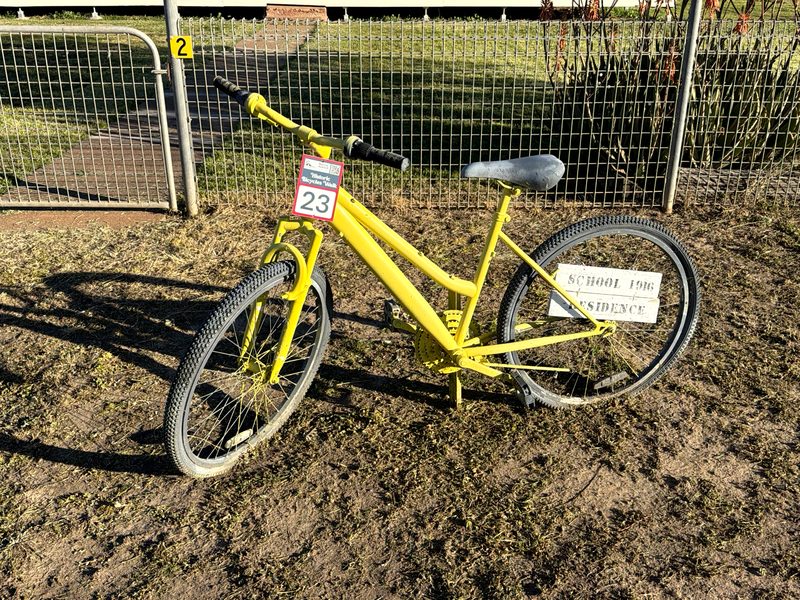
The former Burren Junction School Residence, built in 1912–1913, remains one of the town’s best-preserved historic homes. The yellow bicycle forms part of the Burren Junction Historic Bicycles Walk.
Photo School Residence, 1916
The Burren Junction School Residence in 1916. Built to provide accommodation for the head teacher and family, it symbolised the town’s growing stability and commitment to education.