Site 27 – GrainCorp Silos
 Rising above the plains on the western edge of Burren Junction, the GrainCorp silos are one of the town’s most recognisable landmarks. More than simply grain storage, they tell the story of how agriculture in the district has evolved over more than a century.
Although Burren Junction is now widely recognised as a grain-growing district, the area was originally built on the sheep and wool industry. Following the arrival of the railway in the early 1900s, thousands of sheep grazed the surrounding plains and wool became the district’s principal export. Stock and station agents established businesses in the town to service the pastoral industry, while trains carried wool and livestock to markets throughout New South Wales. For many decades, sheep were the backbone of the local economy.
As farming practices changed after the Second World War, cropping expanded across the district. Wheat, barley and other grains gradually replaced large areas of grazing country, creating the need for modern bulk grain storage.
The Burren Junction concrete silos were constructed in 1963, with a storage capacity of 500,000 bushels. Historic photographs show the enormous engineering project as crawler cranes assembled the steel framework, workers poured the circular concrete silos and the loading equipment was installed. The project marked the beginning of a new era for agriculture in the district.
Before the silos were built, grain was handled in hessian bags and loaded by hand onto railway wagons. The new bulk handling system transformed the industry, allowing grain to be received in bulk, elevated mechanically and loaded directly into rail wagons, greatly improving efficiency during harvest.
As production increased, the complex expanded and remains an active GrainCorp receival site today. While modern technology has been added over the years, the original concrete silos continue to dominate the Burren Junction skyline and remain one of the town’s best-known landmarks.
Although grain is now the district’s largest commodity, sheep remain an important part of Burren Junction’s agricultural heritage. Many local families continue to operate mixed farming enterprises, combining cropping with sheep production and carrying on traditions that have shaped the district for well over a century.
Located beside the silos is the large Welcome to Burren Junction sign, unveiled to celebrate the sealing of the Walgett–Burren Junction Road. For local residents this marked the end of an era of battling the notorious black-soil road, which could become impassable after rain and isolate the town for days. The official unveiling, attended by local school children and residents, celebrated a major milestone in Burren Junction’s development and improved access to surrounding communities.
Today the GrainCorp silos stand as a symbol of Burren Junction’s resilience and progress. Together with the nearby railway, they reflect the district’s journey from a thriving sheep and wool region to one of north-western New South Wales’ important grain-producing areas.
The Good Old Days - Margaret Sendall, Burren Junction
Photos
Photo The GrainCorp silos today continue to dominate the Burren Junction skyline and remain an active grain receival facility.
Photo The completed Burren Junction silos shortly after construction in 1963.
Photo Construction of the bulk grain handling facility, with cranes assembling the loading infrastructure.
Photo Workers inspect progress during construction of the original concrete silos.
Photo The concrete silos taking shape during their construction in 1963.
Photo Local school children gather for the unveiling of the Welcome to Burren Junction sign celebrating the sealing of the Walgett Road.
Photo. The official unveiling of the Welcome to Burren Junction sign, marking the completion of the sealed road from Walgett.
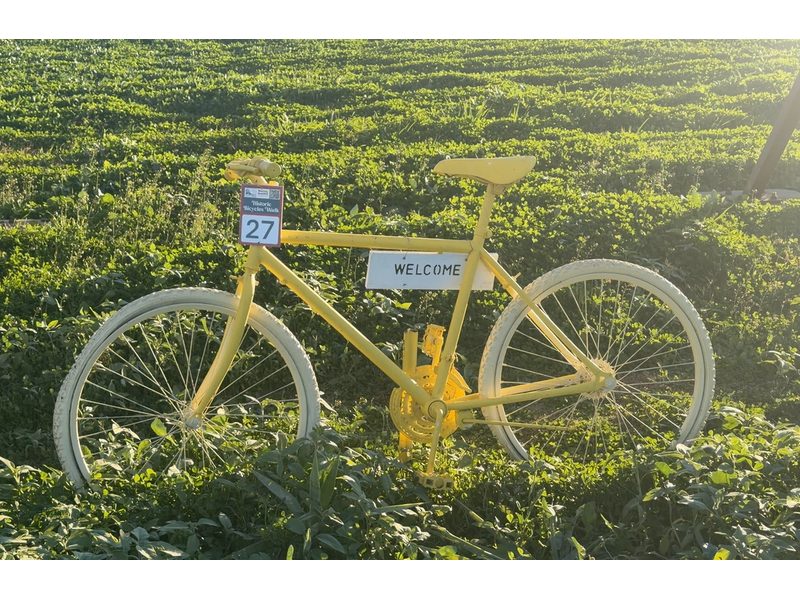
Photo The Welcome to Burren Junction sign stands beside the GrainCorp silos and marks the location of Site 27 on the Historic Bicycles Walk.
Sheep Photo. For many decades Burren Junction was first and foremost a sheep and wool district, with vast flocks grazing the surrounding plains.
Sheep Photo The sheep industry laid the foundations of the local economy long before grain became the district’s dominant crop.
Shearing Shed Display. Traditional shearing equipment, similar to that once used throughout the Burren Junction district, displayed at the Wee Waa Museum.
Sheep Sale Yards Sheep sales and rail transport were an important part of district life during Burren Junction’s pastoral era.