Site 13 – Burren Junction Post Office
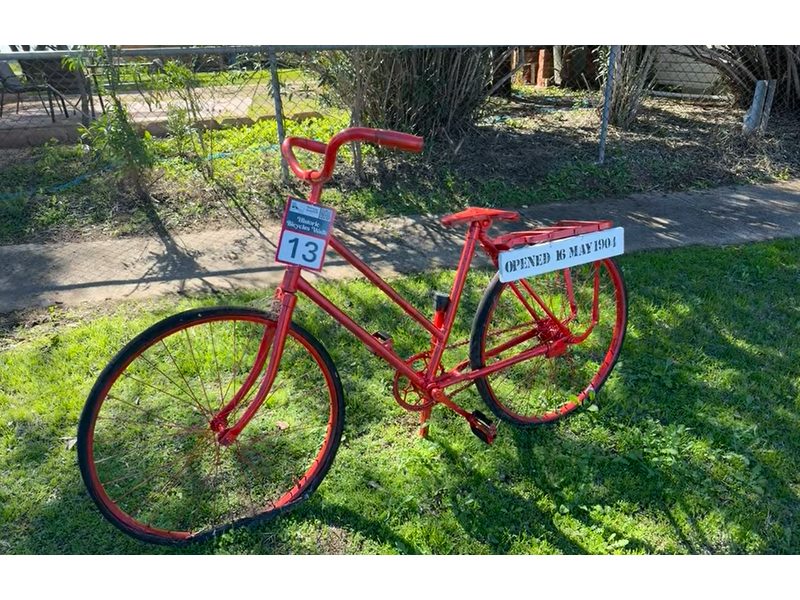 The arrival of the railway transformed Burren Junction from a small settlement into an important transport and distribution centre. As goods, livestock and passengers passed through the town, reliable postal and communication services quickly became essential.
By late 1903, the New South Wales Postal Department recognised the growing importance of Burren Junction. Postal Inspector E. W. Bramble reported that, until the railway was extended further west, Burren Junction would become a busy centre for forwarding goods to Walgett, Collarenebri and surrounding districts. He recommended that a Post Office, together with telegraph and telephone services, be established as soon as possible.
Not everyone agreed on where the new Post Office should be built. A dispute arose over the ownership of land near the railway station, delaying plans for a permanent building. Despite these early difficulties, the Burren Junction Post Office officially opened on 16 May 1904, with railway officer E. Walsh appointed as the first Postmaster.
Initially, postal business was conducted from the railway station while residents continued to campaign for a dedicated Post Office. Telegraph services commenced from the station on 11 August 1905, greatly improving communication with the outside world. Before the telephone became commonplace, telegrams were the fastest way to send urgent messages and quickly became an essential service for families, businesses and government departments.
As Burren Junction continued to grow, so too did the volume of postal business. By 1906, more than 5,000 telegrams were being transmitted each year, together with hundreds of money orders, postal notes and letters. These figures reflected Burren Junction’s growing importance as a thriving railway and commercial centre serving communities throughout north-western New South Wales.
Over the decades, the Post Office became much more than a place to send letters. It served as the communication hub of the district, where residents collected their mail, sent telegrams, paid accounts, purchased stamps and kept in touch with family and friends across Australia and overseas. For many years it was one of the busiest and most important public buildings in town.
Generations of Postmasters and Postmistresses served the Burren Junction community, providing an essential service that connected this isolated rural district with the rest of the country. Their dedication helped ensure that news, business transactions and personal correspondence continued to flow despite the challenges of distance and isolation.
For well over a century, the Burren Junction Post Office has been much more than a place to collect the mail. It has connected families, businesses and the wider community through changing times, from the era of horse-drawn coaches and handwritten letters to telephones, motor vehicles and today’s digital world. Through every generation, it has remained one of Burren Junction’s most recognisable landmarks and a lasting symbol of communication, connection and community
While the Post Office connected Burren Junction by mail and telegram, the next chapter in the town’s communications history came with the arrival of the Telephone Exchange, the next stop on our Historic Bicycles Walk.
Historical information sourced primarily from Visions of the Plains – A History of Burren Junction and District (2nd Edition) by Judy Field, together with historical postal records and local community recollections.
Photographs
Photo The Post Office Today
The Burren Junction Post Office continues to serve the community more than 120 years after postal services were first established in the town.
Photo Historic Post Office
The Burren Junction Post Office during the early twentieth century, when mail, telegrams and money orders connected the district with the rest of Australia.
Photo Horse and Buggy Outside the Post Office
Horse and buggy outside the Burren Junction Post Office shortly after the building was constructed, illustrating a time when horse-drawn transport was still the primary means of travel.
Photo Another View Today
The historic Post Office remains one of Burren Junction’s best-preserved public buildings and continues to be a familiar landmark in the town.
Photo Historic Bicycles Walk Display
The Historic Bicycles Walk postman’s bicycle celebrates the important role the Post Office played in connecting Burren Junction with surrounding communities.
Postmasters and Postmistresses of Burren Junction (1904–1988)
- E. Walsh – 16 May 1904 (Railway Officer and first Postmaster)
- Miss Emily Boake (Non-official)
- F. Carey – 19 April 1906
- T. O’Leary – 15 February 1910
- P. A. Toy – 1 July 1911
- W. V. O’Connor – 18 March 1920
- J. M. Ferguson – 1 July 1924
- J. M. Laughlin – 11 January 1937
- J. T. Williamson – 12 December 1940
- C. B. Watson – 28 March 1945
- D. J. Isbester – 14 April 1949
- W. McFadden – 21 February 1952
- J. McFadden – 21 March 1954
- J. S. Pardence – 12 May 1960
- K. F. Piggott – 8 October 1964
- T. A. McDonald – 4 July 1971
- J. W. Sumpter – 15 July 1971
- Mrs Jenny Chapman – 1 July 1983